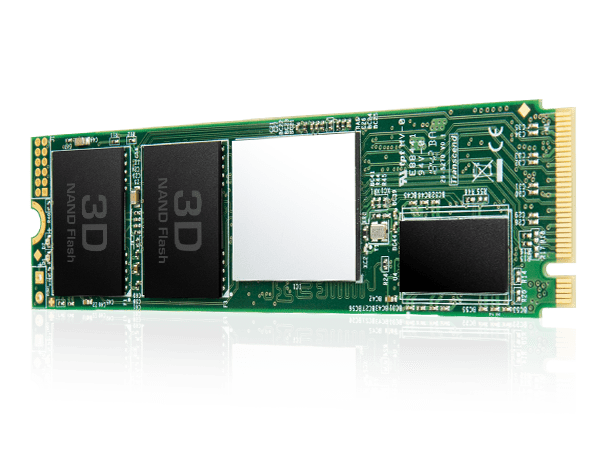

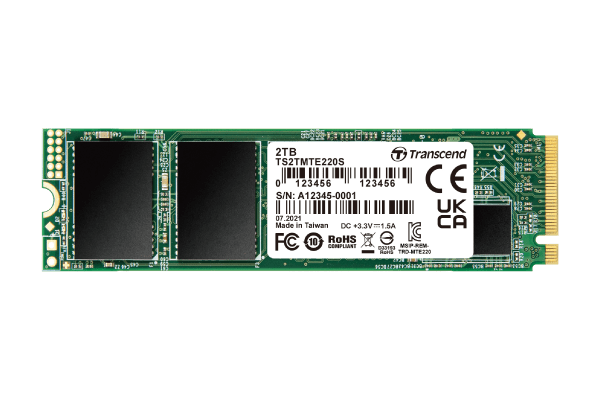

Transcend PCIe SSD 220S M.2 2280 NVMe 512GB
TRANSCEND SSD NVME 512GB, M.2 2280, PCIE GEN3X4, M-KEY, 3D TLC, WITH DRAM
Transcend’s PCIe SSD 220S aims at high-end applications, such as digital audio/video production, gaming, and enterprise use, which require constant processing heavy workloads with no system lags or slowdowns of any kind. Utilizing the PCI Express® Gen3 x4 interface supported by the latest NVMe™ standard, 3D NAND flash memory, an 8-channel controller, and a DRAM cache, the PCIe SSD 220S offers supreme transfer speeds that override others.
GRAB YOURS NOW!
WARRANTY: 5 YR LIMITED WARRANTY
Original price was: ₨4,900.₨4,495Current price is: ₨4,495. inc. Vat
Credit by Rogers Finance: ₨5,169
Apply with Rogers code - RTDL01
Out of stock
TS512GMTE220S
Supreme transfer speeds
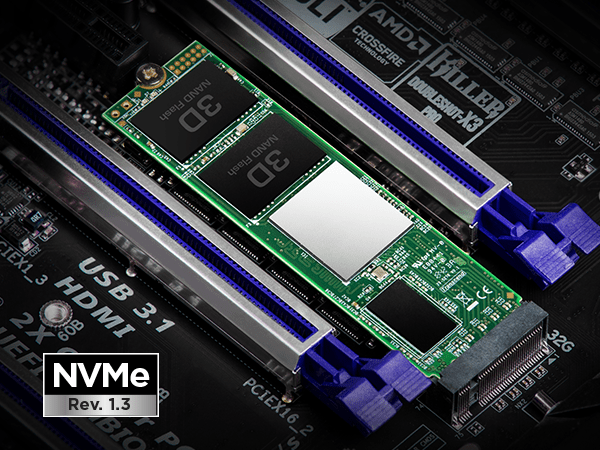
Transcend’s PCIe SSD 220S follows NVMe 1.3 and utilizes the PCIe™ Gen3 x4 interface, meaning four lanes are used for transmitting and receiving data simultaneously. Its 8-channel controller supports ultra high data throughput, resulting in compelling performance of up to 3,500MB/s read and 3,200MB/s write.
Note: Performance is based on CrystalDiskMark v5.0.2.
Understanding the PCIe interface
PCIe (or PCI Express®) is a much faster interface than SATA (or Serial ATA) for connecting a host computer to solid-state storage devices over one or more lanes consisting of one transmit and one receive serial interface in each lane, meaning it can better fulfill new performance requirements.
Understanding the NVMe standard
NVMe (or NVM Express®) is a host controller interface standard designed to address the needs of enterprise and client applications that utilize PCI Express-based solid-state storage. NVMe calls for better performance vectors than AHCI (Advanced Host Controller Interface), including scalable bandwidth, increased IOPS, and low latency.
3D expansion to break through limits
Unlike planar NAND memory, 3D NAND flash features memory cells stacked vertically in multiple layers. 3D NAND overcomes density limitations of 2D planar NAND, and delivers a higher level of performance and endurance.
Better endurance, higher reliability
Transcend’s PCIe SSD 220S is engineered with LDPC (Low-Density Parity Check) coding, a powerful ECC algorithm, to keep data secure. Manufactured with high-quality 3D NAND flash chips, and engineered dynamic thermal throttling mechanism, the PCIe SSD 220S guarantees superior endurance and stability for high-end applications.
SSD Scope software
Transcend SSD Scope is advanced, user-friendly software that makes it easy to ensure your Transcend SSD remains healthy, and continues to run fast and error-free by determining the condition and optimizing the performance of your drive.
Guaranteed quality
To ensure the utmost level of quality, Transcend SSDs undergo rigorous testing at all stages of production, including tests for vibration, temperature and humidity, speed, and functionality.
Specifications
Appearance
Dimensions-Double-sided 80 mm x 22 mm x 3.58 mm (3.15″ x 0.87″ x 0.14″)
Weight-10 g (0.35 oz)
Type-M.2 2280
Interface-Bus Interface
NVMe PCIe Gen3 x4
Storage
Flash Type-3D NAND flash
Capacity-512 GB
Operating Environment- Operating Temperature 0°C (32°F) ~ 70°C (158°F)
Operating Voltage- 3.3V±5%
Performance
Sequential Read/Write(CrystalDiskMark)-512 GBup to 3,500/2,500 MB/s
4K Random Read/Write (IOmeter)-512 GBup to 190,000/360,000 IOPS
Terabytes Written (TBW)-512 GB1,100 TBW
Mean Time Between Failures (MTBF)-2,000,000 hour(s)
Drive Writes Per Day (DWPD)-1.2 (5 yrs)
Note
Speed may vary due to host hardware, software, usage, and storage capacity.
The workload used to rate DWPD may be different from your actual workload, which may vary due to host hardware, software, usage, and storage capacity.
Terabytes Written (TBW) expresses the endurance under the highest capacity.
Some motherboards only provide PCIe x2 connections for the M.2 slot, creating a bottleneck on even the fastest drives.